

Research
BPC-157: The Complete Research Peptide Buyer's Guide (2026)
Discover everything research peptide buyers should know about BPC-157, from product quality and purity to manufacturing, Certificates of Analysis (COAs), HPLC testing, storage, labeling and supplier transparency. This comprehensive guide explains how to evaluate BPC-157 products with confidence using objective quality indicators rather than marketing claims.
FutureCell Research Team · 25–30 min read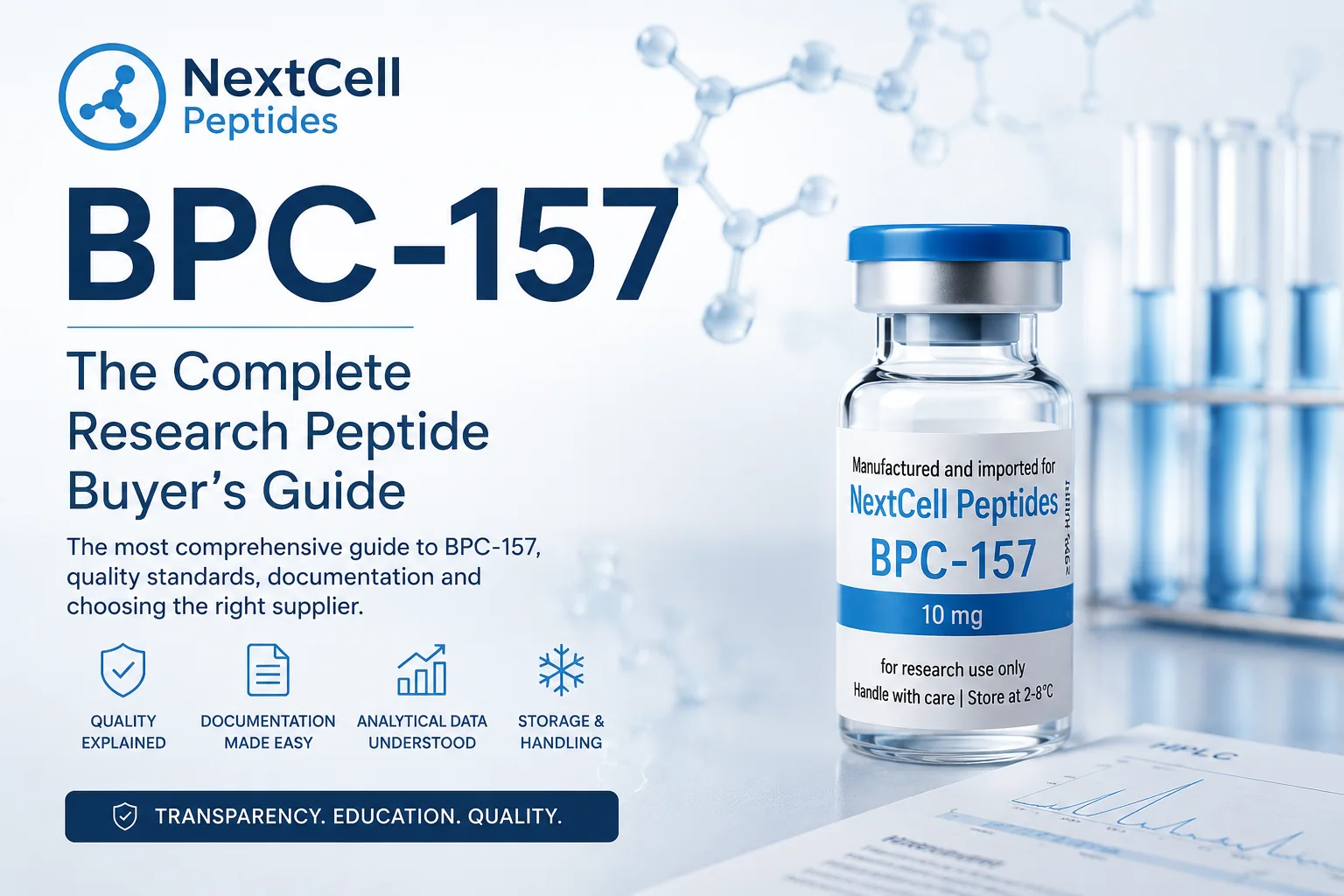
Introduction
BPC-157 has become one of the most recognized research peptides available today. As interest in research peptides continues to grow, buyers are faced with an increasing number of suppliers, product variations and technical terms that can make comparing products surprisingly difficult.
Many websites focus almost exclusively on marketing language or repeat the same basic information without explaining what buyers should actually evaluate before choosing a research peptide supplier. As a result, it can be challenging to distinguish between meaningful quality indicators and claims that offer little practical value.
Choosing a BPC-157 product should involve much more than comparing prices or reading a purity percentage displayed on a product page. Experienced buyers typically evaluate the complete picture, including product presentation, manufacturing transparency, analytical documentation, storage recommendations and the overall professionalism of the supplier.
This guide has been created to provide a comprehensive, evidence-based overview of BPC-157 from a buyer's perspective. Rather than relying on promotional language, it explains how professional research peptide products are presented, what documentation buyers should expect to see and how experienced purchasers compare suppliers using objective quality indicators.
Whether you are researching BPC-157 for the first time or looking to better understand how professional research peptide products are evaluated, this guide is designed to help you make informed decisions with greater confidence.
What Is BPC-157?
BPC-157 is a synthetic research peptide supplied by specialized research peptide companies for laboratory and scientific research applications.
Commercially, BPC-157 is most commonly supplied as a lyophilized (freeze-dried) powder contained within a sterile laboratory vial. Lyophilization removes water from the peptide under carefully controlled conditions, improving stability during storage and transportation before reconstitution for research purposes.
Because the peptide is supplied in a standardized research format, products from different suppliers often appear similar at first glance. However, similarities in appearance do not necessarily reflect similarities in product presentation, documentation or transparency.
Professional suppliers typically provide buyers with considerably more information than simply the product name and peptide amount.
Examples may include:
Clear product specifications.
Storage recommendations.
Batch identification.
Product labeling.
Educational resources.
Certificates of Analysis (COAs), where available.
Analytical testing information, where available.
Comprehensive product descriptions.
Evaluating these factors together provides a more balanced understanding of product quality than relying on a single specification alone.
Why BPC-157 Has Become One of the Most Searched Research Peptides
Few research peptides generate as much interest as BPC-157.
Its widespread recognition has resulted in thousands of educational articles, product pages and supplier websites discussing various aspects of the peptide. While this abundance of information provides buyers with many resources, it also creates a new challenge: determining which information is reliable, objective and genuinely useful.
Many articles focus primarily on repeating general background information. Others rely heavily on promotional language without helping buyers understand how to evaluate the quality of a research peptide product.
Professional buyers typically approach the process differently.
Rather than searching for the supplier making the strongest claims, they compare companies based on transparency, consistency and the quality of information provided before a purchase is made.
Questions experienced buyers often consider include:
Does the supplier clearly explain the product?
Are storage recommendations easy to find?
Is quality documentation explained rather than simply displayed?
Are educational resources available?
Is product information presented consistently throughout the website?
These practical questions provide a far more reliable framework for evaluating suppliers than marketing language alone.
What This Guide Covers
This guide has been designed as a complete educational resource for anyone interested in understanding how professional BPC-157 products are evaluated.
Throughout the following sections, you will learn:
How experienced buyers compare BPC-157 products.
Why transparency matters when evaluating suppliers.
How manufacturing, purity and analytical testing fit together.
What a Certificate of Analysis (COA) can tell you.
How to interpret HPLC documentation.
What information should appear on a professional product label.
Best practices for product storage before and after reconstitution.
Common buying mistakes and how to avoid them.
A practical checklist for comparing research peptide suppliers.
Rather than focusing on promotional claims, each section is intended to help readers understand the objective quality indicators that contribute to a professional research peptide product.
Why Understanding Product Quality Matters
One of the most common misconceptions among new buyers is that a single specification can determine product quality.
In reality, experienced buyers rarely rely on one measurement alone.
Instead, they evaluate multiple factors together, including manufacturing transparency, analytical documentation, storage guidance, product presentation and supplier consistency.
A reported purity percentage, for example, provides useful analytical information, but it does not describe the complete manufacturing process, explain how the product has been handled or demonstrate the level of transparency offered by the supplier.
Professional evaluation involves understanding the complete picture rather than focusing on isolated specifications.
This broader approach not only makes comparing products easier but also helps buyers develop greater confidence when evaluating different suppliers.
Why Professional Buyers Evaluate More Than the Product Name
At first glance, many BPC-157 products appear remarkably similar. They are often supplied in sterile laboratory vials, presented as lyophilized powder and described using comparable terminology. This can make it difficult for buyers to understand what actually separates one product from another.
Experienced buyers know that evaluating a research peptide involves much more than comparing product names or advertised specifications.
Instead of focusing on a single feature, they assess the complete purchasing experience. They consider how transparently the supplier presents information, whether technical documentation is available, how clearly storage recommendations are explained and whether the company invests in educating its customers.
This broader approach helps reduce uncertainty and makes it easier to identify suppliers that prioritize consistency, professionalism and transparency.
What Professional BPC-157 Product Pages Should Include
A high-quality product page should answer questions before the buyer needs to ask them.
Rather than presenting only a product title, price and a brief description, professional suppliers typically provide detailed information that helps buyers evaluate the product objectively.
Useful product pages commonly include:
A clear product name and peptide amount.
Product presentation and description.
Storage recommendations before and after reconstitution.
Batch or lot identification where appropriate.
Product images that accurately represent the item.
Information about analytical documentation.
Links to educational resources explaining quality indicators.
Frequently asked questions relating to the product.
Providing comprehensive information demonstrates transparency and allows buyers to compare suppliers using objective criteria instead of assumptions.
Comparing BPC-157 Products Objectively
Many buyers begin comparing BPC-157 research peptides by looking at purity percentages or product prices.
While both can be useful reference points, neither provides a complete understanding of overall product quality or supplier professionalism.
Experienced buyers take a broader approach by evaluating several objective quality indicators together. This makes it easier to compare products consistently and reduces the likelihood of making decisions based on incomplete information.
When comparing BPC-157 products, consider the following factors:
Product Labeling
Clear, professional labeling supports accurate product identification and improves traceability. Consistent labels also reflect attention to detail across a supplier's product range.Storage Guidance
Suppliers should provide clear storage recommendations before purchase. Accessible handling information helps buyers understand how products should be stored and demonstrates a commitment to transparency.Analytical Documentation
Supporting documentation, such as Certificates of Analysis (COAs) and information about analytical testing where appropriate, provides additional context and helps buyers evaluate products using objective information.Educational Content
Comprehensive buying guides, technical articles and explanations of laboratory terminology help buyers better understand research peptides and interpret product information with greater confidence.Packaging Quality
Consistent packaging and professional product presentation contribute to an organized purchasing experience. While packaging alone does not determine product quality, it often reflects the supplier's attention to detail.Supplier Transparency
Suppliers that clearly explain product specifications, documentation and quality-related information make it easier for buyers to compare products objectively rather than relying on marketing claims or assumptions.
No single quality indicator should be viewed in isolation. Instead, experienced buyers evaluate these factors together to build a more balanced understanding of both the product and the supplier. By considering the complete purchasing experience—not just individual specifications—buyers are better equipped to make informed and objective comparisons.
Why Transparency Is One of the Strongest Quality Indicators
Transparency cannot be measured with a single number, yet it is often one of the most valuable indicators of a professional supplier.
Companies that openly explain their manufacturing process, documentation, storage recommendations and analytical methods make it significantly easier for buyers to evaluate products objectively.
Transparent suppliers generally avoid relying on vague claims or exaggerated marketing language.
Instead, they focus on providing information that buyers can independently review and understand.
This approach builds confidence because it allows purchasing decisions to be based on evidence rather than assumptions.
Understanding Product Documentation
Research peptides are technical products, and technical products require technical documentation.
However, documentation has little value if buyers cannot understand what it means.
Professional suppliers do more than simply upload laboratory reports.
They explain:
What each document represents.
Why it is relevant.
How buyers should interpret the information.
Which quality indicators deserve the most attention.
How different documents work together to provide a broader understanding of product quality.
Educational content transforms technical information into practical knowledge, making it easier for buyers to compare products with confidence.
Why Consistency Matters Across an Entire Product Range
Professional suppliers rarely apply high standards to only one product.
Instead, consistency is usually visible across the entire catalogue.
Examples include:
Standardized product labels.
Consistent packaging design.
Uniform product descriptions.
Similar documentation practices.
Clear storage recommendations.
Educational resources available throughout the website.
Consistency demonstrates that quality systems extend beyond individual products and form part of the company's overall approach.
For buyers comparing suppliers, this level of consistency often provides additional confidence.
Questions Every Buyer Should Ask Before Choosing a Supplier
Before purchasing any research peptide, buyers benefit from asking a few simple questions.
Is the product information complete?
Does the supplier explain quality documentation?
Are storage recommendations easy to find?
Are educational resources available?
Does the company appear transparent throughout the website?
Can important information be understood without contacting customer support?
If these questions are easy to answer, the supplier is already demonstrating a commitment to transparency.
Buyer Insight
Professional buyers rarely make purchasing decisions based on marketing claims alone.
Instead, they compare suppliers by evaluating the quality of the information provided before an order is placed.
Clear documentation, consistent product presentation, educational resources and transparent communication often provide a much stronger indication of professionalism than promotional language ever can.
Understanding Peptide Purity
Purity is one of the most frequently discussed specifications when comparing BPC-157 products, yet it is also one of the most commonly misunderstood.
Many buyers assume that a reported purity percentage alone determines the quality of a research peptide. In reality, purity is only one part of a much broader quality assessment.
Analytical purity describes the proportion of the target peptide detected using a specific laboratory method under defined testing conditions. While this information is valuable, it should always be interpreted alongside additional documentation and quality indicators.
Professional buyers rarely evaluate purity in isolation. Instead, they consider how purity fits within the supplier's overall quality system, including manufacturing practices, analytical testing, documentation and transparency.
Understanding this broader context leads to more informed purchasing decisions and reduces the likelihood of relying solely on marketing claims.
How BPC-157 Is Manufactured
Every BPC-157 product begins long before it reaches a laboratory vial.
The manufacturing process generally includes peptide synthesis, purification, analytical testing, lyophilization, filling, labeling and final packaging. Each stage contributes to the consistency and presentation of the finished product.
Although buyers do not need to understand every technical detail of peptide chemistry, having a basic understanding of the manufacturing process makes it easier to appreciate why professional suppliers emphasize consistency and documentation.
Companies that openly explain how their products are manufactured often demonstrate a greater commitment to transparency than suppliers who focus exclusively on promotional language.
Why Lyophilization Is the Industry Standard
Most professionally supplied BPC-157 products are presented as a lyophilized powder.
Lyophilization, commonly known as freeze-drying, removes water from the peptide under controlled conditions. This process improves stability during storage and transportation while allowing the peptide to remain in a dry state until it is prepared for research use.
For laboratories and research buyers, lyophilization offers several practical advantages.
These include improved storage stability, reduced transportation challenges and consistent product presentation across different batches.
Understanding why most research peptides are supplied in this format helps buyers recognize that product presentation is based on practical laboratory requirements rather than marketing preferences.
Understanding Certificates of Analysis (COAs)
A Certificate of Analysis, commonly referred to as a COA, is one of the most important documents associated with a professionally presented research peptide.
A COA summarizes analytical information relating to a specific production batch and provides buyers with documented test results generated during quality evaluation.
Depending on the manufacturer or analytical laboratory, a Certificate of Analysis may include information such as:
Product identification.
Batch or lot number.
Analytical methods.
Purity results.
Appearance.
Acceptance criteria.
Test results.
Date of analysis.
A professional supplier should not only make documentation available where appropriate but also help buyers understand what the document actually represents.
Documentation is most valuable when accompanied by clear educational guidance.
Understanding HPLC Reports
Many Certificates of Analysis include results generated using High-Performance Liquid Chromatography (HPLC).
HPLC is one of the most widely used analytical techniques for evaluating peptide samples under controlled laboratory conditions.
The chromatogram generated during HPLC analysis provides valuable information about the analytical profile of the sample. However, the graph itself should never be interpreted without context.
Experienced buyers understand that an HPLC chromatogram forms part of a larger analytical report rather than acting as a standalone quality certificate.
Reviewing chromatograms together with the Certificate of Analysis and supporting documentation provides a more complete understanding of the analytical information available for a particular batch.
Reading a Professional BPC-157 Label
Product labels perform an important role beyond branding.
A professionally designed label helps identify the product clearly while supporting traceability and consistent inventory management.
Depending on the supplier, labels may include:
Product name.
Peptide amount.
Batch identification.
Product code.
Storage recommendations.
Expiration or manufacturing information where applicable.
Well-designed labels allow buyers and laboratories to identify products quickly while reducing the likelihood of confusion during storage or handling.
Consistent labeling across an entire product range also reflects attention to detail throughout the manufacturing and packaging process.
Proper Storage Before Reconstitution
Proper storage begins immediately after receiving the product.
Before reconstitution, lyophilized BPC-157 should always be stored according to the supplier's recommendations.
Professional suppliers clearly communicate storage guidance before purchase rather than leaving buyers to search for information after the product has been delivered.
Clear storage instructions help maintain product integrity while giving buyers confidence that they are handling research materials appropriately.
Storage Considerations After Reconstitution
Once a peptide has been reconstituted, handling practices become increasingly important.
Storage recommendations may differ from those provided for the lyophilized product, making it essential to follow the supplier's published guidance.
Professional suppliers should present these recommendations clearly and consistently across both product pages and educational resources.
Providing practical storage information reflects a commitment to helping buyers understand the complete product lifecycle rather than focusing solely on the initial purchase.
Why Education Is a Quality Indicator
One characteristic often shared by respected research peptide suppliers is a strong investment in education.
Instead of expecting buyers to interpret technical documentation independently, professional companies publish resources that explain concepts such as purity, analytical testing, storage practices and Certificates of Analysis in clear, accessible language.
Educational content benefits both new and experienced buyers.
It reduces uncertainty, improves understanding and allows purchasing decisions to be based on objective information rather than assumptions or promotional claims.
For many buyers, the quality of a supplier's educational resources becomes an important indicator of the company's overall professionalism and long-term commitment to transparency.
How to Compare BPC-157 Suppliers
Choosing a research peptide supplier involves much more than comparing prices or reading a product title.
As the market has expanded, many suppliers now present products with similar descriptions, making it increasingly difficult to determine what truly distinguishes one company from another.
Experienced buyers rarely base their decision on a single specification. Instead, they evaluate the supplier's overall commitment to quality, transparency and education.
Rather than asking "Which supplier claims to offer the highest quality?", they ask questions that can be answered objectively.
For example:
Is product information complete and easy to understand?
Are storage recommendations clearly explained?
Does the supplier publish educational resources?
Is analytical documentation available where appropriate?
Are product images consistent with the information provided?
Does the company appear transparent throughout the purchasing process?
Evaluating suppliers using objective criteria leads to more informed purchasing decisions than relying on marketing language alone.
What Professional Research Peptide Suppliers Typically Provide
Professional suppliers understand that buyers often compare more than the product itself.
The overall purchasing experience plays an important role in building confidence before an order is placed.
Although practices vary between companies, professional suppliers commonly provide:
Comprehensive product descriptions.
Clear product images.
Consistent product labeling.
Storage recommendations.
Educational buying guides.
Certificates of Analysis where appropriate.
Information about analytical testing.
Transparent quality documentation.
Responsive customer support.
The goal is not simply to present a product but to provide enough information for buyers to make informed decisions independently.
Red Flags Buyers Should Be Aware Of
Just as professional suppliers share common characteristics, there are also warning signs that deserve closer attention.
While a single issue does not necessarily indicate poor quality, multiple warning signs may suggest that additional research is worthwhile.
Examples include:
Product pages containing very little technical information.
Missing or inconsistent storage recommendations.
Vague marketing claims without supporting explanations.
Poor-quality product images.
Inconsistent product specifications.
Educational content copied across multiple products without meaningful differences.
Technical documentation presented without explanation.
Limited transparency regarding quality processes.
Professional suppliers typically reduce uncertainty rather than creating it.
The easier it is to understand how a supplier presents products and documentation, the easier it becomes to evaluate the company objectively.
Why Documentation Should Support the Entire Buying Process
Documentation should not exist simply to fill space on a product page.
Its purpose is to help buyers understand the product before making a purchasing decision.
For BPC-157 research peptides, useful documentation may include product specifications, storage guidance, analytical reports and educational resources explaining how these documents should be interpreted.
When documentation is presented alongside clear explanations, buyers can evaluate products with greater confidence rather than relying on assumptions.
Professional suppliers recognize that transparency is most valuable when information is both accessible and understandable.
Product Presentation Matters
Although product presentation alone cannot determine quality, it often reflects the level of attention given to the overall customer experience.
Professional presentation typically includes:
Consistent branding.
Clearly printed labels.
Protective packaging.
Accurate product photography.
Logical product organization.
Easy-to-read technical information.
These details may appear small individually, but together they contribute to a more professional purchasing experience.
Companies that pay close attention to presentation often apply the same level of care to documentation, education and customer communication.
A Practical Framework for Comparing Suppliers
Experienced buyers rarely compare research peptide suppliers using only one or two specifications.
Instead, they evaluate multiple aspects of the purchasing experience to build a more complete understanding of both the supplier and the product. Looking at these factors together provides a more balanced and objective comparison than relying on individual claims or specifications.
When comparing BPC-157 suppliers, consider the following areas:
Transparency
Does the supplier explain products, documentation and quality-related information clearly? Transparent communication helps buyers understand what they are purchasing and reduces uncertainty throughout the evaluation process.Documentation
Is technical information available, well organized and easy to understand? Supporting documentation, educational explanations and analytical information demonstrate a commitment to openness rather than relying solely on promotional claims.Product Information
Are product specifications complete, accurate and consistent across the website? Comprehensive product information allows buyers to compare products objectively and understand exactly what is being offered.Storage Guidance
Does the supplier provide clear storage recommendations before purchase? Practical handling information reflects attention to detail and helps buyers understand how products should be stored and managed.Educational Resources
Does the supplier invest in helping buyers understand technical concepts? High-quality buying guides, laboratory explanations and educational articles make it easier to interpret documentation and compare products with confidence.Product Presentation
Are product labels, packaging and product images consistent and professionally presented? A well-organized presentation reflects attention to detail and contributes to a more professional purchasing experience.
Evaluating these areas together provides a far more comprehensive understanding than reviewing any single specification in isolation. Rather than asking which supplier offers the lowest price or the highest reported purity, experienced buyers focus on identifying suppliers that consistently demonstrate transparency, professionalism and a commitment to providing reliable information before purchase.
Buyer Checklist Before Purchasing BPC-157
Before selecting a supplier, review the following checklist.
✓ Product information is complete.
✓ Storage recommendations are clearly explained.
✓ Product images accurately represent the item.
✓ Labels appear consistent and professional.
✓ Analytical documentation is available where appropriate.
✓ Educational resources explain technical concepts.
✓ The supplier demonstrates transparency rather than relying on marketing claims.
✓ Product specifications are easy to understand.
✓ The website is well organized and professionally maintained.
Completing this simple review often provides a clearer picture of a supplier than comparing prices alone.
Why Confidence Matters More Than Marketing
Ultimately, choosing a BPC-157 supplier is about reducing uncertainty.
Professional suppliers understand that buyers are not simply purchasing a laboratory product—they are evaluating whether the information provided allows them to make an informed decision.
Transparency builds confidence.
Education builds trust.
Clear documentation supports objective evaluation.
When these elements are combined, buyers can compare suppliers using evidence rather than assumptions.
That approach benefits both experienced researchers and those purchasing research peptides for the first time.
Frequently Asked Questions
What is BPC-157?
BPC-157 is a synthetic research peptide commonly supplied as a lyophilized powder for laboratory and scientific research applications. Professional suppliers typically provide product specifications, storage recommendations and supporting educational resources to help buyers better understand the product.
Why is BPC-157 supplied as a lyophilized powder?
Lyophilization, or freeze-drying, removes water from the peptide under controlled conditions. This presentation improves storage stability and makes transportation and long-term storage more practical before reconstitution.
What does the "mg" value on the vial represent?
The value displayed on the label, such as 5 mg or 10 mg, identifies the amount of lyophilized peptide contained within the vial before reconstitution. Professional suppliers clearly state this information on both the product label and product page.
Is purity the most important quality indicator?
Purity is an important analytical measurement, but it should never be evaluated on its own.
Experienced buyers typically consider purity alongside analytical documentation, manufacturing transparency, storage guidance, labeling and supplier consistency to gain a more complete understanding of product quality.
What is a Certificate of Analysis?
A Certificate of Analysis (COA) is a laboratory document that summarizes analytical information for a specific production batch.
Depending on the laboratory, a COA may include product identification, batch number, analytical methods, purity results and other quality-related information.
Why do some suppliers provide HPLC reports?
High-Performance Liquid Chromatography (HPLC) is one of the most widely used analytical techniques for peptide analysis.
Some suppliers make chromatograms or HPLC reports available to provide additional transparency regarding analytical testing.
These reports should always be interpreted together with the accompanying documentation.
How should BPC-157 be stored before reconstitution?
Storage recommendations may vary depending on the manufacturer and packaging. Buyers should always follow the guidance provided by the supplier.
Professional suppliers make storage recommendations easy to find before purchase rather than requiring customers to request this information afterward.
Does packaging indicate product quality?
Packaging alone cannot determine product quality.
However, consistent labeling, protective packaging and professional presentation often reflect an organized quality management process and attention to detail throughout manufacturing and fulfillment.
Why do product labels differ between suppliers?
Each supplier designs its own labels and packaging.
Although the appearance may vary, professionally designed labels generally include clear product identification, peptide amount, storage information and batch identification where appropriate.
The consistency and clarity of the information are often more important than the visual design itself.
What should buyers look for when comparing suppliers?
Rather than focusing on a single specification, experienced buyers typically compare:
Product information.
Storage guidance.
Analytical documentation.
Educational resources.
Product presentation.
Transparency.
Consistency across the supplier's website.
Evaluating several quality indicators together provides a more balanced comparison than relying on marketing claims alone.
Can two suppliers offer products with similar specifications?
Yes.
Different suppliers may present products with similar specifications while differing significantly in documentation, educational resources, product presentation and overall transparency.
For this reason, experienced buyers often evaluate the complete purchasing experience rather than comparing specifications in isolation.
Why does supplier transparency matter?
Transparent suppliers help buyers understand the information behind the product.
Clear explanations of documentation, manufacturing, storage and analytical testing reduce uncertainty and allow purchasing decisions to be based on objective information instead of assumptions.
Related Guides
Understanding BPC-157 becomes easier when viewed alongside the broader topics that influence product quality and supplier evaluation.
For readers who would like to explore these areas in more detail, the following guides provide additional context:
Together, these guides provide a more complete understanding of how research peptides are manufactured, analyzed, documented and presented before reaching the end user.
Key Takeaways
When evaluating BPC-157 research peptides, avoid relying on a single specification or marketing claim.
Instead, consider the product as part of a complete quality system that includes manufacturing, analytical testing, storage guidance, documentation and supplier transparency.
A professional supplier should help buyers understand the product rather than simply advertise it.
The more information that is clearly presented before purchase, the easier it becomes to compare products objectively and make informed decisions with confidence.
Ultimately, experienced buyers recognize that product quality is reflected not only in the peptide itself but also in the professionalism, consistency and transparency demonstrated throughout the entire purchasing process.
Summary
Choosing a BPC-157 research peptide involves far more than comparing prices or reading a purity percentage.
Professional buyers evaluate the complete picture, including manufacturing standards, analytical documentation, product presentation, storage recommendations and the overall transparency of the supplier.
By understanding how these elements work together, buyers can move beyond marketing claims and make decisions based on objective information.
Whether you are new to research peptides or already familiar with laboratory products, developing a structured approach to product evaluation will help you compare suppliers more effectively and identify companies that prioritize education, consistency and quality.
As the research peptide market continues to evolve, suppliers that invest in transparency and comprehensive educational resources are likely to stand out—not because they make the boldest claims, but because they provide the information buyers need to evaluate products with confidence.
How to Evaluate a Research Peptide Website
The quality of a BPC-157 product should never be evaluated in isolation.
The supplier's website often provides valuable insight into the company's overall approach to quality, transparency and customer education.
Professional research peptide suppliers typically invest significant time in developing educational resources that help buyers understand technical concepts before making a purchasing decision.
Rather than relying exclusively on promotional language, they explain how products are manufactured, how analytical testing is performed and how quality documentation should be interpreted.
A well-developed knowledge base also demonstrates that the supplier is committed to helping customers make informed decisions instead of simply encouraging purchases.
Signs of a Professional Research Peptide Supplier
While every company operates differently, experienced buyers often notice several characteristics shared by suppliers that prioritize quality and transparency.
These commonly include:
Detailed product descriptions written specifically for each product.
Consistent product photography.
Clearly presented storage recommendations.
Educational articles covering manufacturing, analytical testing and quality documentation.
Transparent explanations of Certificates of Analysis and HPLC reports.
Professional product labels.
Consistent branding throughout the website.
Easy access to customer support when additional questions arise.
Individually, none of these characteristics guarantees product quality.
Together, however, they often reflect a structured and professional approach to research peptide distribution.
Why Educational Content Builds Trust
Educational content has become one of the strongest indicators of supplier transparency.
Professional companies recognize that informed buyers make better purchasing decisions.
Instead of expecting customers to understand technical terminology independently, they publish resources explaining concepts such as peptide purity, analytical testing, storage practices, manufacturing standards and quality documentation.
This educational approach benefits both new buyers and experienced researchers by reducing uncertainty and making complex information easier to understand.
For many buyers, the quality of a supplier's educational resources becomes an important factor when comparing companies offering similar products.
Questions to Ask Before Purchasing BPC-157
Before selecting a supplier, it is worth asking a few practical questions.
Can the company clearly explain how its products are presented?
Are storage recommendations available before purchase?
Does the supplier explain analytical documentation rather than simply displaying laboratory reports?
Is educational information written specifically for the product, or does it appear to be copied across multiple pages?
Does the website make it easy to understand the product without relying on customer support?
The answers to these questions often provide valuable insight into how seriously a supplier approaches quality, transparency and customer education.
Building Confidence Through Information
Confidence is rarely created through advertising alone.
Instead, confidence develops when buyers feel they have enough information to understand exactly what they are purchasing.
Professional suppliers reduce uncertainty by presenting products clearly, explaining technical concepts in accessible language and supporting their product pages with educational resources that answer common questions.
Rather than encouraging buyers to trust marketing claims, they provide information that allows customers to evaluate products independently.
This approach creates long-term trust and helps buyers compare suppliers using objective criteria rather than assumptions.
Final Thoughts
BPC-157 remains one of the most widely recognized research peptides available today, but choosing a supplier involves far more than comparing product names or purity percentages.
Experienced buyers evaluate products within the context of a complete quality system that includes manufacturing standards, analytical testing, storage guidance, documentation and supplier transparency.
Companies that invest in education, clear communication and consistent product presentation make it easier for buyers to understand what they are purchasing and why those details matter.
Ultimately, the most informed purchasing decisions are made when technical information is presented clearly, documentation is easy to understand and quality is supported by transparency rather than marketing alone.
Whether you are evaluating BPC-157 for the first time or comparing multiple suppliers, taking a structured approach will help you identify companies that prioritize professionalism, consistency and customer education.
The goal is not simply to find a product—it is to find a supplier that provides the information needed to evaluate that product with confidence.
View the BPC-157 10 mg product page →