Guides
CJC-1295 (No DAC) vs CJC-1295 DAC: Understanding the Differences and Where Ipamorelin Fits in Research
Understand the key differences between CJC-1295 (No DAC) and CJC-1295 DAC, including half-life, research applications, analytical documentation and quality indicators to help you compare research peptides with confidence before buying.
FutureCell Research Team · 15 min read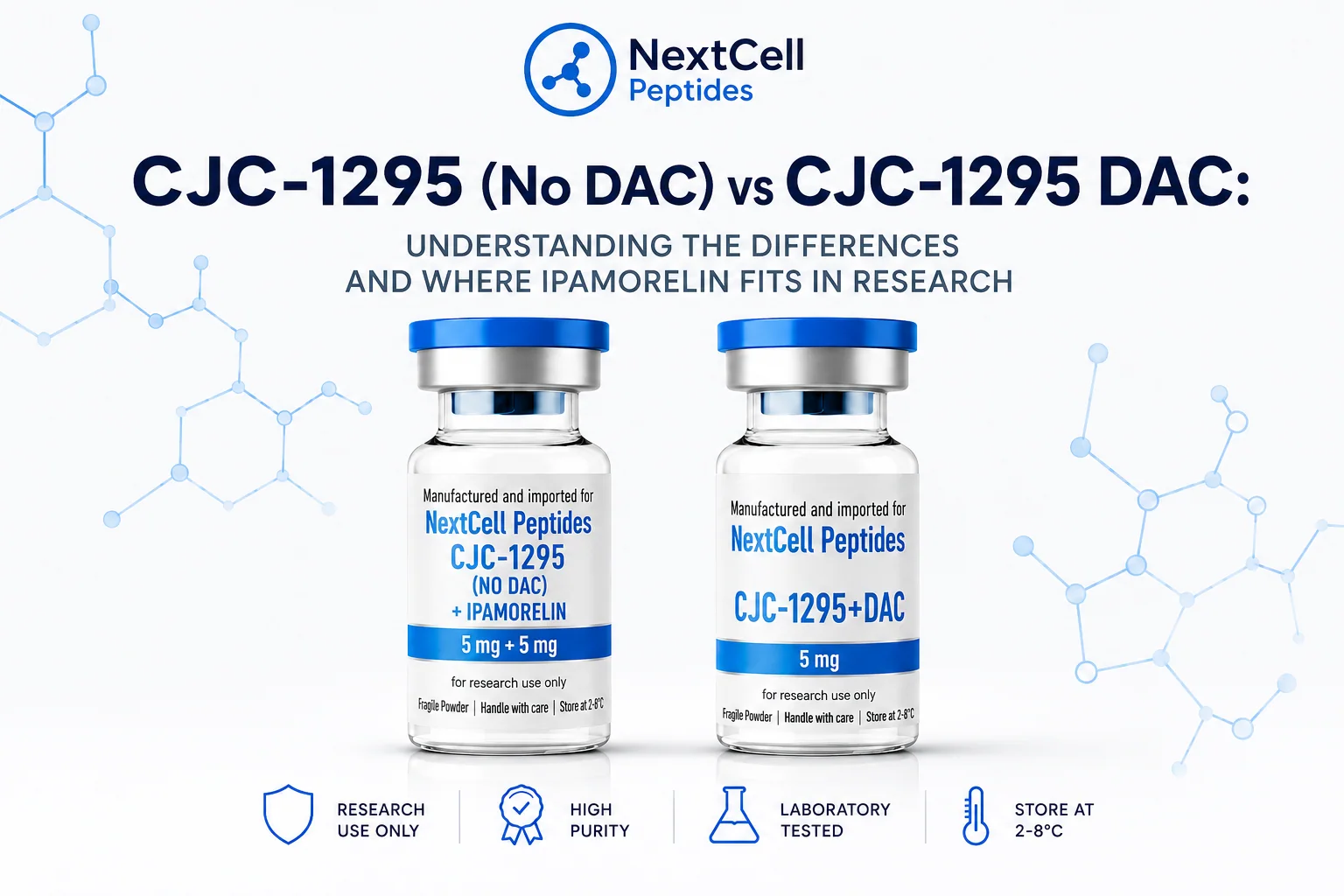
Introduction
When researching CJC-1295, one of the first questions many buyers encounter is whether there is a difference between CJC-1295 (No DAC) and CJC-1295 DAC. Although the names are nearly identical, they refer to two distinct research peptides with different molecular structures and separate analytical identities.
This distinction is important because research peptides should always be evaluated based on the specific compound being supplied. Product documentation, laboratory testing, and Certificates of Analysis are only meaningful when they correspond to the correct peptide variant. Understanding molecular identity before comparing purity, documentation, or manufacturing standards helps researchers make more informed decisions throughout the evaluation process.
Another source of confusion is Ipamorelin, which is frequently discussed alongside both CJC-1295 variants. While combination products are common within the research peptide market, Ipamorelin is not a modified form of CJC-1295. It is an independent synthetic peptide with its own molecular characteristics, manufacturing process, and analytical documentation.
If you're new to research peptides, this article is best read alongside Research Peptides Explained: The Complete Beginner's Guide, which introduces the terminology, manufacturing processes, and quality principles referenced throughout this guide.
Another source of confusion is Ipamorelin, which is frequently discussed alongside both CJC-1295 variants. While combination products are common within the research peptide market, Ipamorelin is not a modified form of CJC-1295. It is an independent synthetic peptide with its own molecular characteristics, manufacturing process, and analytical documentation. Researchers interested in how these peptides are commonly presented together can also explore CJC-1295 (No DAC) + Ipamorelin.
Table of Contents
What Is CJC-1295?
What Does DAC Mean?
Why Are There Two Versions of CJC-1295?
Structural Differences Between CJC-1295 (No DAC) and DAC
Where Does Ipamorelin Fit?
How to Identify Which Variant a Supplier Offers
Common Misconceptions About CJC-1295
Frequently Asked Questions
Summary
What Is CJC-1295?
CJC-1295 is a synthetic peptide used in laboratory research. Within the research peptide market, the name "CJC-1295" may refer to one of two different molecular variants:
CJC-1295 (No DAC)
CJC-1295 DAC
Although both originate from the same peptide sequence, they are not the same finished compound. The addition of a Drug Affinity Complex changes the molecular composition of one variant, creating a separate research material that should be identified independently in laboratory documentation and product specifications.
For researchers comparing suppliers, recognising this distinction is an important first step before reviewing analytical reports or product documentation. Understanding exactly which peptide is being supplied helps prevent confusion when comparing research materials from different manufacturers.
What Does DAC Mean?
DAC stands for Drug Affinity Complex, a chemical modification attached to the peptide after synthesis. Rather than changing the amino acid sequence itself, the DAC component alters the overall molecular composition of the finished peptide.
As a result, CJC-1295 DAC is not simply another name for CJC-1295 (No DAC). The two variants represent different molecular entities that require their own product specifications, analytical documentation, and quality records.
This distinction is particularly relevant when reviewing supplier information. A Certificate of Analysis, chromatographic report, or product specification should always identify the exact peptide variant being tested rather than referring only to "CJC-1295."
Because CJC-1295 (No DAC) and CJC-1295 DAC are different molecular entities, their analytical documentation should always correspond to the specific variant being evaluated. Researchers comparing technical specifications should verify that the Certificate of Analysis (COA), product specifications, and supporting laboratory documentation all refer to the same peptide. Understanding how to interpret this documentation can help reduce confusion when comparing research materials from different suppliers. For a more detailed explanation of COAs and the information they contain, see What Is a Certificate of Analysis (COA)?
Why Are There Two Versions of CJC-1295?
The existence of two CJC-1295 variants often causes confusion because many suppliers use the shortened name "CJC-1295" in product descriptions or marketing materials. Without additional clarification, it may not be immediately obvious whether the product refers to the unmodified peptide or the DAC-modified variant.
For this reason, experienced research buyers look beyond the product name alone. They verify the complete product specification, review the accompanying documentation, and confirm that the molecular identity matches the peptide they intend to purchase.
This approach reflects the same evaluation principles discussed in How to Choose a High-Quality Research Peptide Supplier: The Complete Buyer's Guide , where product transparency and documentation are treated as fundamental indicators of research quality rather than optional extras.
Structural Differences Between CJC-1295 (No DAC) and DAC
Although CJC-1295 (No DAC) and CJC-1295 DAC share the same peptide sequence, they are not identical research materials. The defining difference is the presence of a Drug Affinity Complex (DAC) attached to the DAC variant, resulting in a distinct molecular entity with its own molecular weight, analytical profile, and product specifications.
This structural difference extends beyond terminology. Because the two variants are chemically distinct, laboratory documentation should always identify the specific peptide being evaluated. Product specifications, Certificates of Analysis (COAs), batch records, and analytical reports should consistently correspond to either CJC-1295 (No DAC) or CJC-1295 DAC rather than using the generic name "CJC-1295."
Researchers reviewing technical documentation should therefore verify the identity of the peptide before comparing purity values or chromatographic data. Establishing the correct molecular identity first helps ensure that subsequent analytical information is interpreted within the appropriate context. For researchers interested in understanding how chromatographic data supports peptide analysis, How to Read an HPLC Chromatogram The Complete Guide for Research Peptide Buyers provides a more detailed explanation.
Where Does Ipamorelin Fit?
Ipamorelin is frequently discussed alongside CJC-1295 because many research suppliers offer the peptides together as combination products. Despite this association, Ipamorelin is not a modified version of CJC-1295 and should not be considered another CJC-1295 variant.
Instead, Ipamorelin is an independent synthetic peptide with its own amino acid sequence, molecular identity, manufacturing process, and analytical documentation. When supplied as part of a combination product, both peptides retain their individual characteristics and should be supported by appropriate product specifications and laboratory records.
Understanding this distinction helps researchers avoid a common misconception that CJC-1295 (No DAC), CJC-1295 DAC, and Ipamorelin represent variations of the same peptide. In reality, they are separate research materials that may be supplied together but remain analytically distinct.
Researchers interested in evaluating combination products in greater detail can also refer to CJC-1295 + Ipamorelin: The Complete Research Peptide Buyer's Guide (2026).
How to Identify Which Variant a Supplier Offers
Because many suppliers shorten product names to simply "CJC-1295," researchers should verify exactly which variant is being offered before comparing products or reviewing laboratory documentation.
The product name should clearly specify whether the peptide is CJC-1295 (No DAC) or CJC-1295 DAC. This information should remain consistent across the product page, product label, Certificate of Analysis (COA), and any supporting analytical documentation. Consistency across these materials helps confirm that the documentation corresponds to the correct research peptide.
If a supplier provides limited technical information or does not clearly distinguish between the two variants, researchers may find it more difficult to compare products accurately. Reviewing product documentation carefully before making comparisons helps reduce uncertainty and supports a more objective evaluation process.
For a broader framework on assessing supplier transparency and product documentation, see How to Compare Research Peptide Suppliers: A Buyer's Checklist and How to Choose a High-Quality Research Peptide Supplier: The Complete Buyer's Guide.
How
Common Misconceptions About CJC-1295
Because the names are so similar, CJC-1295 (No DAC) and CJC-1295 DAC are often misunderstood. Clarifying these differences helps researchers interpret product information and laboratory documentation more accurately.
"CJC-1295" always refers to the same peptide.
Not necessarily. While both variants originate from the same peptide sequence, the addition of a Drug Affinity Complex (DAC) creates a distinct molecular entity. Researchers should therefore verify which variant is being referenced before comparing technical specifications or laboratory documentation.
Ipamorelin is a version of CJC-1295.
No. Ipamorelin is an independent synthetic peptide with its own molecular structure and analytical identity. Although it is frequently supplied alongside CJC-1295 (No DAC), it should not be considered another form of CJC-1295.
The product name alone is enough to identify the peptide.
Not always. Some suppliers use abbreviated product names, making it important to review product specifications and supporting documentation to determine whether the peptide is CJC-1295 (No DAC) or CJC-1295 DAC.
Research performed on one variant automatically applies to the other.
Because the two variants are different molecular entities, published research and laboratory documentation should always be interpreted within the context of the specific peptide being investigated.
Frequently Asked Questions
What is the difference between CJC-1295 (No DAC) and CJC-1295 DAC?
The primary difference is the presence of a Drug Affinity Complex (DAC) attached to the DAC variant. This modification creates a different molecular entity with its own analytical identity and supporting documentation.
Is CJC-1295 (No DAC) the same as Mod GRF 1-29?
The terms are often used interchangeably within the research peptide community. However, researchers should always confirm the product specifications provided by the supplier to ensure the correct peptide is being referenced.
Is Ipamorelin a form of CJC-1295?
No. Ipamorelin is a separate synthetic peptide with its own molecular characteristics. It is commonly supplied alongside CJC-1295 (No DAC) but is not a modified version of CJC-1295.
Why are CJC-1295 and Ipamorelin frequently discussed together?
Many research suppliers offer the peptides individually and as combination products, which has led to them being commonly associated within peptide research. Despite this association, they remain separate compounds with independent analytical documentation.
How can researchers determine which CJC-1295 variant is being supplied?
Researchers should review the complete product name, technical specifications, and supporting documentation to confirm whether the peptide is identified as CJC-1295 (No DAC) or CJC-1295 DAC.
Why does the distinction between the two variants matter?
Correctly identifying the peptide helps ensure that product specifications, analytical reports, and laboratory documentation correspond to the research material being evaluated.
Summary
Although CJC-1295 (No DAC) and CJC-1295 DAC share the same peptide backbone, they are distinct research materials with different molecular identities. The addition of a Drug Affinity Complex creates a separate peptide variant that should be identified independently throughout product documentation, analytical testing, and laboratory records.
Understanding this distinction helps researchers interpret technical documentation more accurately and compare research materials with greater confidence. It also reduces the likelihood of confusing analytical data generated for different peptide variants.
Ipamorelin adds another layer of complexity because it is frequently supplied alongside CJC-1295 (No DAC). While these peptides are often discussed together, Ipamorelin remains an independent research peptide with its own molecular identity, manufacturing process, and analytical documentation.
Researchers seeking to evaluate research peptides should therefore focus not only on product names but also on clear product identification, transparent documentation, and consistent technical specifications. Building a complete understanding of these factors supports more informed comparisons and contributes to higher standards in peptide research.