Guides
How to Compare Semax Suppliers: A Research Buyer's Guide (2026)
Learn how to compare Semax suppliers using objective quality indicators, including manufacturing standards, HPLC testing, Certificates of Analysis (COAs), batch traceability, storage guidance, and supplier transparency.
FutureCell Research Team · 16 min read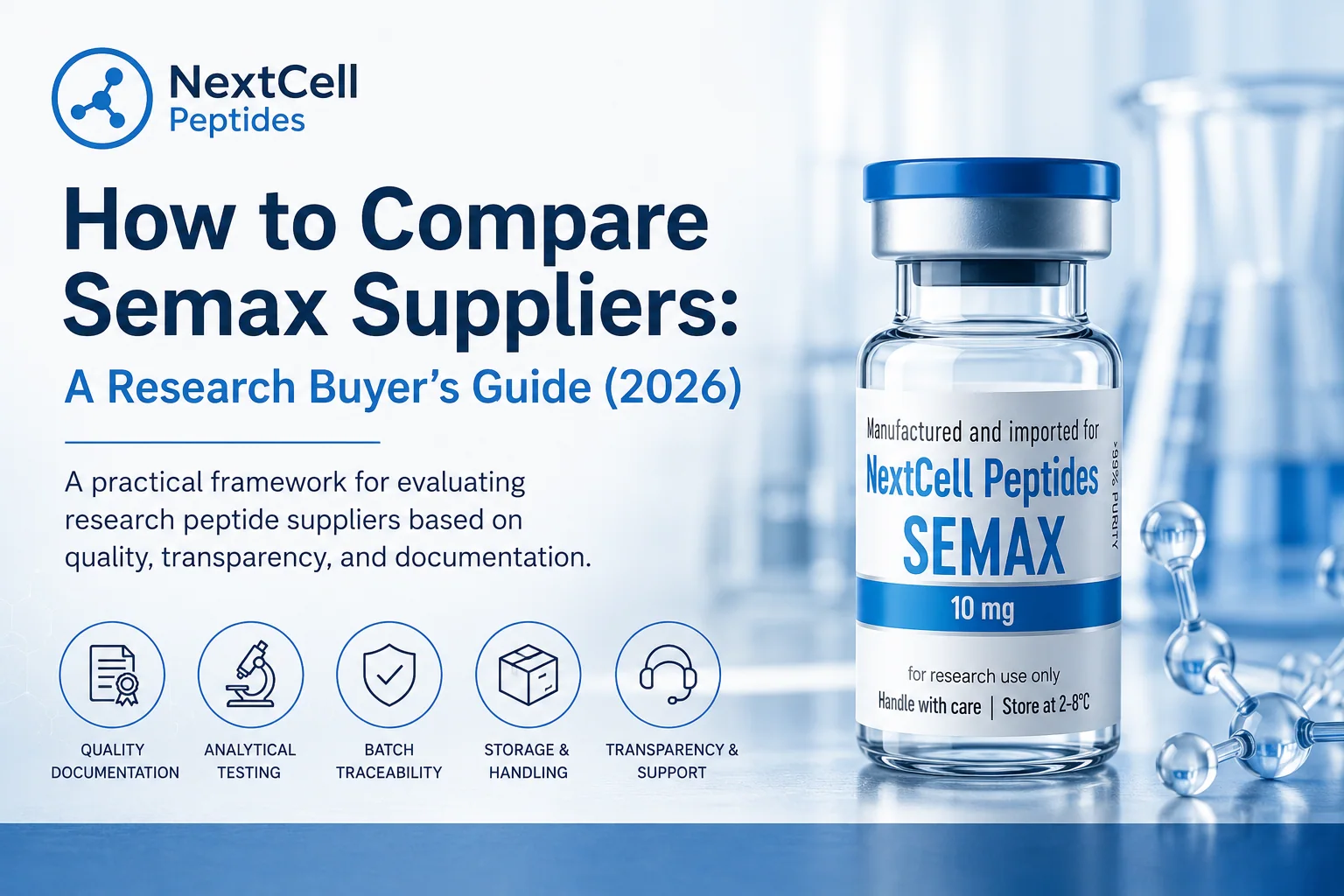
Introduction
Choosing a Semax supplier is one of the most important decisions in the research peptide purchasing process. While many suppliers promote high purity, premium quality, or laboratory testing, these claims alone rarely provide enough information to evaluate whether a product has been manufactured and documented to a consistent research standard.
For experienced research buyers, supplier selection is based on transparency rather than marketing. A trustworthy supplier should provide clear information about manufacturing practices, quality assurance procedures, analytical documentation, storage recommendations, and batch traceability. Together, these factors create a more complete picture of product quality than price or promotional claims alone.
Comparing suppliers also requires understanding what information should be available before a purchase is made. Researchers should be able to review documentation, evaluate manufacturing standards, and assess how openly a supplier communicates its quality processes. Suppliers that make this information accessible help reduce uncertainty and support more informed purchasing decisions.
This guide explains how to compare Semax suppliers using objective evaluation criteria rather than subjective marketing claims. Instead of recommending specific companies, it provides a structured framework that researchers can apply when evaluating any supplier offering research-grade Semax.
Readers looking for a broader introduction to Semax can first explore the Semax Research Peptide Buyer's Guide, while current product specifications and batch information are available on the Semax Product Page.
Table of Contents
Why Supplier Selection Matters
The FutureCell Supplier Evaluation Framework™
Manufacturing Transparency
Quality Documentation
Product Information and Labelling
Communication and Customer Support
Questions Every Research Buyer Should Ask
Frequently Asked Questions
Related Research Guides
Summary
Why Supplier Selection Matters
Research peptides with similar labels or specifications are not necessarily supported by the same manufacturing standards or level of documentation. Two Semax products may list identical purity percentages while differing significantly in quality assurance procedures, analytical transparency, and batch consistency.
Choosing a supplier is therefore about evaluating the systems behind the product rather than the product description itself. Reliable suppliers invest in consistent manufacturing, structured documentation, and transparent quality processes that allow researchers to review objective information before making a purchasing decision.
A supplier's willingness to explain how products are manufactured, documented, and quality-controlled often provides more insight than promotional claims about purity or performance. The goal is not to identify the cheapest or most heavily marketed product, but to identify suppliers that consistently demonstrate professionalism, transparency, and a commitment to research-quality standards.
The FutureCell Supplier Evaluation Framework™
Rather than comparing suppliers based on price alone, evaluate them using a structured framework built around objective quality indicators.
Before choosing a Semax supplier, ask whether they can clearly demonstrate:
Transparent manufacturing standards
Batch-specific quality documentation
Independent analytical verification
Clear batch traceability
Appropriate storage guidance
Accurate product labelling
Professional educational resources
Responsive customer support
No supplier will be perfect in every category. However, those that consistently provide transparent information across multiple quality indicators generally allow researchers to make more informed purchasing decisions than suppliers relying primarily on marketing claims.
Manufacturing Transparency
Manufacturing transparency is one of the strongest indicators of a supplier's overall commitment to quality. While most suppliers describe their products using terms such as "high purity" or "research grade," these descriptions provide limited value unless they are supported by clear information about how the peptide was produced and verified.
Reputable suppliers openly explain the manufacturing process, including peptide synthesis, purification, quality control procedures, and analytical verification. Although every manufacturer has proprietary processes, researchers should expect enough information to understand how product consistency is maintained from one batch to the next.
Suppliers that invest in transparent manufacturing practices are generally better positioned to provide consistent documentation, maintain reliable quality standards, and support researchers with accurate product information. Transparency does not guarantee product quality, but it demonstrates a willingness to support quality claims with meaningful information.
Researchers comparing Semax suppliers should therefore evaluate manufacturing transparency alongside every other aspect of supplier quality rather than relying on marketing language alone.
Quality Documentation
Reliable documentation allows researchers to evaluate a supplier using objective evidence instead of promotional claims. Rather than focusing solely on advertised purity percentages, buyers should consider whether the supplier provides consistent, batch-specific information that supports the quality of each product.
Examples of useful documentation include Certificates of Analysis (COAs), analytical reports, batch identification, storage recommendations, and clearly presented product specifications. Together, these documents provide researchers with greater confidence that quality assurance procedures have been performed before the product reaches the laboratory.
Well-organized documentation also reflects a supplier's broader commitment to transparency. Suppliers that invest in accurate records, clear laboratory documentation, and accessible educational resources typically make it easier for researchers to compare products using measurable quality indicators rather than assumptions.
Product Information and Labelling
Clear product information is another important factor when comparing Semax suppliers. Labels should accurately identify the peptide, strength, batch number, storage recommendations, and any other information necessary for proper laboratory handling.
Consistent labelling helps reduce confusion when reviewing documentation and allows researchers to match the product they receive with the corresponding analytical records. Batch numbers, product names, and storage instructions should be presented clearly and consistently across the vial, packaging, and supporting documentation.
Researchers should also consider whether the supplier provides detailed product information beyond the label itself. Comprehensive product pages, educational guides, and technical documentation often indicate a stronger commitment to transparency than minimal product descriptions containing only basic specifications.
When evaluating suppliers, product presentation should be considered as one element within a broader quality assessment rather than an isolated indicator of quality.
Communication and Customer Support
Communication is often overlooked when comparing research peptide suppliers, yet it can provide valuable insight into a company's overall approach to transparency. Suppliers that respond clearly to questions about manufacturing, documentation, storage, and quality assurance demonstrate a greater willingness to support researchers throughout the purchasing process.
Researchers should consider whether a supplier can provide timely answers regarding product specifications, batch information, and supporting documentation before an order is placed. A supplier that openly shares relevant information allows buyers to evaluate products using objective evidence rather than relying solely on information published on a product page.
Educational resources also form part of effective customer support. Detailed research guides, explanations of analytical documentation, and information about manufacturing processes help researchers make informed decisions while demonstrating the supplier's commitment to transparency and scientific communication.
Ultimately, responsive communication should complement—not replace—objective quality documentation. Reliable support is most valuable when it reinforces information that can already be verified through product documentation and quality assurance records.
Questions Every Research Buyer Should Ask
Comparing Semax suppliers becomes considerably easier when every supplier is evaluated using the same objective questions. Rather than focusing on marketing claims or price alone, researchers should gather consistent information that allows meaningful comparisons between suppliers.
Before purchasing, consider asking:
Is batch-specific documentation available before purchase?
Are Certificates of Analysis (COAs) provided for every production batch?
Does the supplier explain its manufacturing and quality assurance procedures?
Are storage recommendations clearly documented?
Is each product supported by batch identification and traceability?
Does the supplier publish educational resources that explain quality standards?
Are product specifications presented clearly and consistently?
Can customer support answer technical questions accurately and transparently?
Using the same evaluation criteria for every supplier helps remove subjectivity from the purchasing process and encourages decisions based on documented quality rather than promotional language.
Common Supplier Red Flags
Although no single factor determines whether a supplier should be avoided, certain warning signs may indicate that additional evaluation is necessary before making a purchase.
Potential red flags include:
Limited or unavailable batch-specific documentation.
Generic analytical reports that cannot be linked to individual production batches.
Inconsistent or incomplete product information.
Missing storage recommendations.
No visible batch or lot identification.
Heavy reliance on promotional language without supporting evidence.
Limited educational content explaining manufacturing or quality assurance.
Difficulty obtaining answers to reasonable product-related questions.
A single issue does not necessarily indicate poor product quality. However, when several of these warning signs appear together, researchers may wish to evaluate alternative suppliers that provide greater transparency and more comprehensive documentation before making a purchasing decision.
Frequently Asked Questions
Why is choosing the right Semax supplier important?
Different suppliers may offer products with similar specifications while varying significantly in manufacturing standards, quality assurance procedures, documentation, and transparency. Evaluating the supplier—not just the product—helps researchers make more informed purchasing decisions.
What should I compare besides price?
Researchers should compare manufacturing transparency, product documentation, batch traceability, storage recommendations, product labelling, customer support, and the availability of educational resources. These factors provide a broader view of supplier quality than price alone.
Should every supplier provide a Certificate of Analysis?
Many reputable suppliers provide batch-specific Certificates of Analysis to support transparency. Researchers should confirm that any documentation corresponds to the specific production batch being purchased.
Does supplier transparency indicate product quality?
Transparency alone does not guarantee quality. However, suppliers that openly explain their manufacturing processes, documentation, and quality assurance procedures generally provide researchers with more objective information for evaluation.
Why is batch traceability important?
Batch traceability allows researchers to match the product they receive with its corresponding analytical documentation, supporting consistency and transparency throughout the purchasing process.
Can product appearance be used to compare suppliers?
Packaging and presentation may reflect a supplier's attention to detail, but they should never be used as the primary indicator of product quality. Documentation, manufacturing standards, and analytical verification remain more meaningful evaluation criteria.
Is a higher price always associated with a better supplier?
Not necessarily. Researchers should evaluate the overall quality framework supporting a product rather than assuming that price alone reflects manufacturing quality or supplier reliability.
Where can I learn more before choosing a supplier?
Educational resources covering manufacturing, analytical testing, storage, and quality documentation can help researchers compare suppliers using objective criteria rather than marketing claims.
Related Research Guides
Continue exploring our educational resources:
Summary
Choosing a Semax supplier requires more than comparing prices or advertised purity percentages. Researchers should evaluate the complete quality framework supporting each supplier, including manufacturing transparency, product documentation, batch traceability, storage guidance, communication, and overall commitment to quality assurance.
No single quality indicator determines whether a supplier is the right choice. Instead, objective evaluation should combine multiple factors that together provide a clearer picture of consistency, transparency, and professionalism throughout the manufacturing and supply process.
By applying a structured supplier evaluation framework, researchers can compare Semax suppliers using evidence rather than marketing claims. Those wishing to continue their research can explore the Semax Research Peptide Buyer's Guide, review the Semax Price Guide, or visit the Semax Product Page for product specifications and supporting documentation.