

Guides
How to Identify High-Quality Semax: A Buyer's Checklist (2026)
Learn how to identify high-quality Semax by evaluating HPLC purity testing, Certificates of Analysis (COAs), manufacturing standards, batch traceability, storage guidance, and supplier transparency before purchasing research peptides.
FutureCell Research Team · 16 min read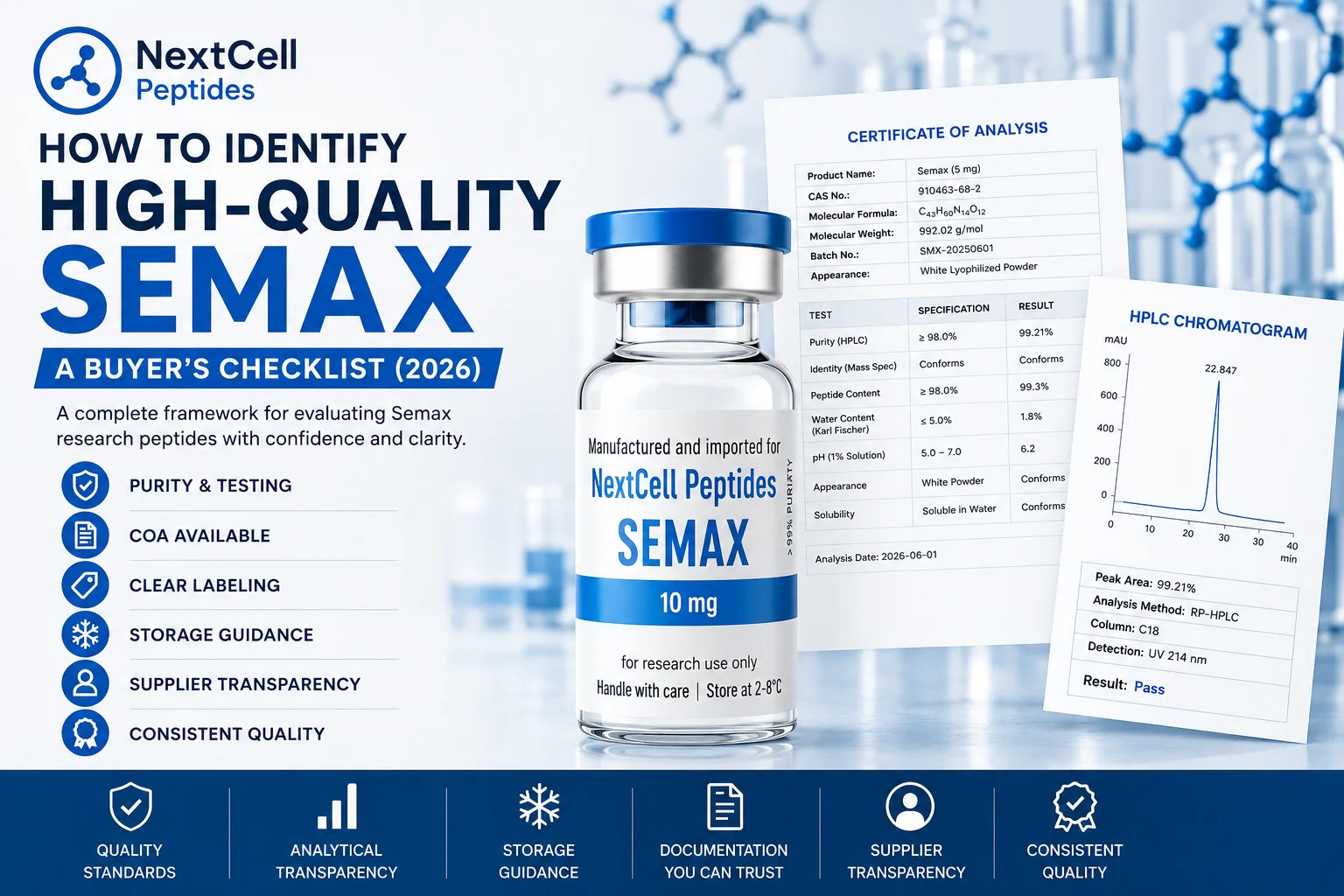
Introduction
Finding a Semax product is relatively easy. Determining whether it meets the quality standards expected for laboratory research is considerably more challenging.
Many research peptide suppliers advertise high purity percentages, laboratory testing, and premium manufacturing. While these claims may appear reassuring, they rarely provide enough information to evaluate the overall quality of a product. Experienced buyers instead focus on objective indicators such as analytical documentation, manufacturing consistency, batch traceability, and supplier transparency.
A high-quality research peptide is not defined by marketing language or attractive packaging. It is supported by verifiable documentation, consistent manufacturing practices, and analytical testing that allows researchers to assess the quality of each production batch independently.
This guide explains the most important factors to evaluate before purchasing Semax for research purposes. Rather than comparing brands or making promotional claims, it provides a practical framework that helps researchers identify trustworthy products using measurable quality indicators.
Researchers looking for a complete overview of Semax can also read our Semax Research Peptide Guide before using this buyer's checklist.
Table of Contents
Why Product Quality Matters
The FutureCell Semax Quality Checklist
Manufacturing Standards
HPLC Purity Testing
Certificates of Analysis (COAs)
Batch Traceability
Storage and Packaging
Supplier Transparency
Common Buying Mistakes
Frequently Asked Questions
Related Research Guides
Summary
Why Product Quality Matters
Not all Semax products are manufactured or documented to the same standard. While products from different suppliers may appear nearly identical, significant differences can exist in manufacturing procedures, analytical verification, quality documentation, and traceability.
For researchers, these differences matter because reliable documentation supports confidence in the consistency of the product being evaluated. Batch-specific analytical testing, clearly documented manufacturing processes, and transparent quality control procedures provide a stronger basis for assessment than purity claims alone.
Evaluating quality also involves looking beyond a single specification. A reported purity percentage, for example, should be considered alongside analytical reports, manufacturing consistency, storage guidance, and supplier transparency. Taken together, these factors provide a more complete understanding of the product than any individual claim.
Throughout this guide, each of these quality indicators is explained in greater detail, helping researchers develop a structured approach to comparing Semax suppliers objectively.
The FutureCell Semax Quality Checklist
Before selecting a Semax product, experienced researchers typically review several key quality indicators rather than relying on a single specification.
A high-quality Semax product should ideally provide:
Batch-specific Certificates of Analysis (COAs)
Independent HPLC purity testing
Clear batch or lot identification
Transparent manufacturing information
Appropriate storage recommendations
Accurate product labeling
Supplier transparency regarding quality control
Consistent analytical documentation
No single factor confirms product quality on its own. Instead, researchers should consider the complete body of evidence provided by the supplier before comparing products or making a purchasing decision.
Manufacturing Standards
The manufacturing process is one of the strongest indicators of research peptide quality, yet it is often overlooked by buyers. While many Semax products may appear similar on the surface, differences in manufacturing controls can influence batch consistency, documentation, and overall product reliability.
Most research-grade peptides are produced using solid-phase peptide synthesis (SPPS), a well-established manufacturing technique that enables amino acids to be assembled in a controlled sequence. After synthesis, the peptide undergoes purification, analytical verification, and lyophilization before being filled into laboratory vials.
A reputable supplier should be transparent about its manufacturing process and explain how quality is maintained throughout production. Clear information about purification methods, analytical testing, storage recommendations, and batch documentation provides researchers with greater confidence than marketing claims alone.
Rather than asking whether a supplier claims to produce a "high-quality" peptide, experienced buyers ask whether the supplier can demonstrate consistent manufacturing standards supported by objective documentation.
HPLC Purity Testing
One of the most widely used methods for evaluating peptide purity is High-Performance Liquid Chromatography (HPLC). This analytical technique separates the components within a sample, allowing laboratories to determine the proportion that corresponds to the intended peptide.
For Semax, HPLC testing provides valuable insight into the effectiveness of the purification process. A chromatogram can show whether the sample is primarily composed of the target peptide or whether additional components remain following manufacturing.
However, purity should never be viewed as the only indicator of quality. A high purity percentage does not independently verify peptide identity, manufacturing consistency, or overall quality assurance. Instead, HPLC results should be interpreted alongside batch documentation, manufacturing information, and other analytical records.
When comparing suppliers, researchers should look for batch-specific HPLC reports rather than generic examples that may not correspond to the product being purchased.
Certificates of Analysis (COAs)
A Certificate of Analysis (COA) is one of the most valuable documents accompanying a research peptide. It provides analytical information relating to a specific production batch and helps researchers verify that testing has been performed before the product is released.
Although formats vary between manufacturers and laboratories, a comprehensive COA typically includes batch identification, analytical methods, purity results, testing dates, and product identification. These details allow researchers to compare documentation with the product they have received and confirm that the analytical records correspond to the correct batch.
A supplier willing to provide clear, batch-specific documentation demonstrates a greater level of transparency than one relying solely on product descriptions or general purity claims. While a COA does not guarantee quality on its own, it forms an essential part of a broader quality evaluation process.
Batch Traceability
Batch traceability is an essential part of evaluating any research peptide. Every production batch should be assigned a unique batch or lot number that links the finished product to its corresponding analytical documentation.
This traceability allows researchers to verify that Certificates of Analysis (COAs), HPLC reports, and other quality records relate to the specific batch they have received rather than to a different manufacturing run. Batch-specific documentation provides greater confidence than generic reports because it demonstrates that the analytical data corresponds directly to the product being evaluated.
Traceability also supports consistent quality management throughout manufacturing, packaging, and distribution. A supplier that maintains clear batch identification shows a structured approach to documentation and quality assurance, making it easier for researchers to review the information associated with each product.
When comparing Semax suppliers, batch traceability should be considered alongside manufacturing standards, analytical testing, and overall documentation rather than as a standalone quality indicator.
Storage and Packaging
Proper storage and packaging play an important role in preserving the quality of research peptides before laboratory use. Most Semax products are supplied as lyophilized peptides, helping maintain stability during storage and transportation when handled according to the manufacturer's recommendations.
Researchers should look for suppliers that provide clear storage guidance together with appropriate packaging designed to protect the product from unnecessary environmental exposure. Well-labelled vials, secure packaging, and transparent storage recommendations demonstrate attention to quality throughout the supply chain.
Although packaging does not determine peptide quality, it reflects the supplier's overall approach to quality control and documentation. Clear labels, batch identification, and storage instructions help reduce confusion and improve traceability within laboratory environments.
Supplier Transparency
Supplier transparency is one of the most important factors when evaluating research peptides. Rather than relying on promotional language, reputable suppliers explain how their products are manufactured, tested, documented, and stored.
Transparent suppliers typically make batch-specific Certificates of Analysis available, explain their analytical testing procedures, provide clear storage recommendations, and maintain consistent product documentation. This information allows researchers to evaluate products using objective quality indicators instead of unsupported claims.
Educational resources are another useful indicator of transparency. Suppliers who invest in explaining manufacturing processes, analytical testing, and quality documentation often provide researchers with greater confidence than companies that focus primarily on product descriptions.
When comparing Semax suppliers, buyers should consider transparency as part of the overall quality assessment alongside manufacturing standards, analytical verification, and batch traceability.
Common Buying Mistakes
Choosing a Semax product based solely on price or advertised purity can lead to an incomplete assessment of quality. While these factors may influence purchasing decisions, they provide only a small part of the information researchers should consider.
One of the most common mistakes is assuming that a high purity percentage automatically indicates a superior product. Purity is an important analytical measurement, but it should always be evaluated alongside manufacturing standards, batch traceability, analytical documentation, and supplier transparency.
Another frequent mistake is overlooking batch-specific documentation. Generic Certificates of Analysis or example HPLC reports do not necessarily represent the product being purchased. Researchers should verify that analytical documentation corresponds to the batch number printed on the product label.
Finally, buyers sometimes underestimate the importance of educational transparency. Suppliers that clearly explain their manufacturing processes, testing procedures, storage recommendations, and quality control systems generally provide researchers with more information for making informed comparisons.
Evaluating Semax using multiple quality indicators rather than a single specification provides a more reliable framework for comparing research-grade products.
Frequently Asked Questions
What is Semax?
Semax is a synthetic research peptide derived from a modified fragment of adrenocorticotropic hormone (ACTH). It is supplied for laboratory research and should be evaluated using appropriate analytical documentation and quality standards.
Why is HPLC testing important?
HPLC testing helps evaluate peptide purity and provides researchers with analytical information relating to the composition of a specific production batch.
What is a Certificate of Analysis (COA)?
A Certificate of Analysis is a laboratory document summarizing analytical information associated with a specific production batch, including purity testing, analytical methods, and batch identification.
How should Semax be stored?
Researchers should always follow the manufacturer's storage recommendations together with any guidance provided in the accompanying laboratory documentation.
What should I look for when comparing Semax suppliers?
Researchers should evaluate manufacturing transparency, HPLC testing, batch-specific Certificates of Analysis, storage recommendations, batch traceability, and overall supplier documentation rather than relying solely on marketing claims.
Does a higher purity percentage always indicate a better product?
No. Purity is only one indicator of quality and should always be considered alongside manufacturing consistency, analytical documentation, and supplier transparency.
Why is batch traceability important?
Batch traceability allows researchers to verify that analytical documentation corresponds to the specific product they have received, improving transparency and supporting consistent quality management.
Is packaging an indicator of quality?
Packaging alone does not determine product quality, but clear labeling, batch identification, and storage instructions often reflect a supplier's overall approach to quality assurance.
Related Research Guides
Continue expanding your knowledge with these educational resources:
Summary
Selecting a high-quality Semax product involves far more than comparing prices or advertised purity percentages. Researchers should evaluate the complete quality profile of a product, including manufacturing standards, analytical testing, batch traceability, storage guidance, and supplier transparency.
Reliable suppliers support their products with objective documentation rather than marketing claims alone. Batch-specific Certificates of Analysis (COAs), HPLC reports, and clear quality documentation provide researchers with the information needed to compare products objectively and confidently.
By applying the evaluation framework outlined in this guide, researchers can make more informed purchasing decisions based on transparency, documentation, and consistent quality standards. Those wishing to explore the topic further can continue with our Semax Research Peptide Guide and additional educational resources covering research peptide quality and analytical testing.