
Guides
How to Compare Research Peptide Suppliers: A Buyer's Checklist
Learn how to compare research peptide suppliers using practical quality indicators, identify signs of professionalism, and make more informed purchasing decisions beyond price alone.
FutureCell Research Team · 15 min read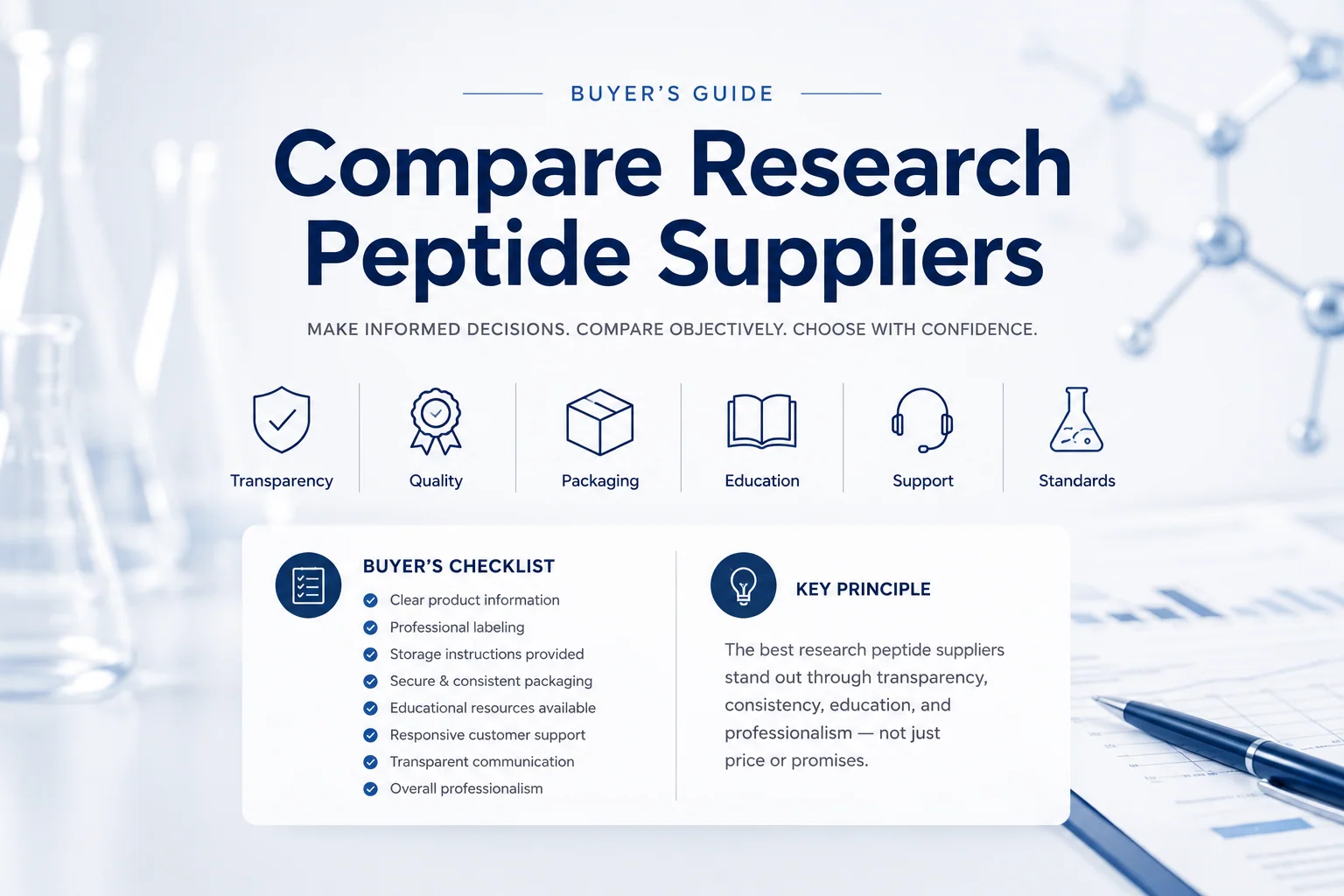
When purchasing research peptides, the supplier is just as important as the product itself.
While many buyers focus primarily on price or advertised purity, experienced researchers often evaluate a much broader range of factors before deciding where to purchase. Product presentation, transparency, educational resources, storage guidance and overall professionalism all contribute to a supplier's credibility.
Choosing a supplier should never be based on a single specification or marketing claim. Instead, it should involve evaluating the complete picture to determine whether the company provides the information and consistency expected from a professional research peptide supplier.
This guide explains how to compare research peptide suppliers objectively, highlights the quality indicators experienced buyers look for and provides a practical framework for making more informed purchasing decisions.
Why Comparing Suppliers Matters
Research peptides are offered by many companies, yet the information provided can vary significantly from one supplier to another.
Some suppliers invest considerable effort in creating informative product pages, clear labeling and educational resources, while others provide only minimal information beyond a product name and price.
Comparing suppliers carefully helps buyers understand not only what they are purchasing but also how transparent, organized and professional a company appears throughout the buying process.
Rather than relying on assumptions, experienced buyers compare suppliers using consistent evaluation criteria.
Looking Beyond Price
Price is often the first factor buyers notice, but it rarely tells the complete story.
Lower prices may reflect different business models, packaging choices or purchasing volumes, while higher prices do not automatically indicate better products.
Instead of comparing prices in isolation, buyers should consider what information and support accompany the product.
Questions worth asking include:
Is the product information comprehensive?
Are storage recommendations provided?
Is the packaging professionally presented?
Does the supplier explain how products should be handled?
Is the website informative and easy to navigate?
Evaluating these factors together provides a far more balanced assessment than comparing prices alone.
Transparency Is One of the Strongest Quality Indicators
Transparency is often one of the clearest signs of a professional supplier.
Companies that invest in educating customers typically make important information easy to access rather than hiding it behind vague marketing language.
Examples of transparent practices include:
Detailed product descriptions
Clear peptide identification
Storage recommendations
Professional product photography
Educational buying guides
Frequently asked questions
Consistent product information across the website
Transparency does not guarantee product quality, but it allows buyers to make more informed decisions based on accessible information rather than assumptions.
Evaluate the Website Before Evaluating the Product
A supplier's website often provides valuable insight into the company's overall professionalism.
Professional websites are typically organized, consistent and designed to help buyers understand the products they are considering.
Look for:
Clear navigation
Detailed product pages
Educational articles
Professional branding
Easy-to-find contact information
Consistent design throughout the website
A well-maintained website reflects attention to detail and makes it easier for buyers to compare products with confidence.
Product Information Should Answer Your Questions
Professional suppliers aim to answer common questions before a customer needs to ask them.
Well-written product pages generally explain:
The peptide name
Product quantity
Storage recommendations
Packaging information
Product presentation
General handling guidance
The goal is not to overwhelm buyers with technical terminology but to provide clear, practical information that supports informed purchasing decisions.
Consistency Builds Confidence
Consistency is one of the easiest ways to distinguish professional suppliers.
Rather than treating each product as an isolated listing, established suppliers usually maintain the same quality standards across their entire catalogue.
This includes:
Consistent labeling
Uniform packaging
Similar product page layouts
Professional photography
Clear descriptions
Standardized formatting
Consistency creates a more predictable buying experience and makes it easier for customers to compare products without unnecessary confusion.
Professional Packaging Reflects Professional Standards
Packaging is often overlooked when comparing research peptide suppliers, yet it provides valuable insight into how a company presents its products.
Professional suppliers typically invest in packaging that protects the product during transportation while making important information easy to identify.
Well-designed packaging usually features:
Clear product identification
Consistent branding
Easy-to-read labels
Appropriate storage information
Professional print quality
Durable materials
Although packaging alone cannot determine product quality, it often reflects the supplier's overall attention to detail and commitment to providing a professional customer experience.
Educational Content Demonstrates Long-Term Commitment
One of the strongest indicators of a professional research peptide supplier is a willingness to educate customers.
Rather than relying solely on product listings, many established suppliers invest in educational resources that explain peptide manufacturing, storage, labeling, handling and quality considerations.
Educational content helps buyers make informed decisions instead of relying entirely on marketing claims.
When evaluating suppliers, consider whether they provide:
Comprehensive buying guides
Educational blog articles
Frequently asked questions
Storage recommendations
Clear explanations of product terminology
Suppliers that prioritize education often demonstrate a long-term commitment to transparency and customer support.
Customer Support Should Be Easy to Reach
Reliable customer support is another important factor when comparing suppliers.
Even experienced buyers occasionally have questions regarding product availability, shipping or general product information.
Professional suppliers make it easy to contact their team through clearly displayed contact information and respond in a professional, timely manner.
Before purchasing, consider whether the supplier provides:
A dedicated contact page
Email support
Frequently asked questions
Clear shipping information
Straightforward return or support policies
Accessible customer support contributes to a more confident purchasing experience.
Compare Suppliers Using a Complete Evaluation Framework
Rather than focusing on one characteristic, experienced buyers compare suppliers across multiple areas.
Evaluation AreaWhy It MattersProduct InformationHelps buyers understand exactly what they are purchasing.Website QualityReflects professionalism and attention to detail.PackagingSupports product identification and presentation.Educational ResourcesDemonstrates transparency and customer education.Storage GuidanceHelps researchers handle products correctly.Consistent BrandingBuilds confidence across the entire product range.Customer SupportMakes it easier to resolve questions before and after purchasing.
Evaluating suppliers across multiple criteria provides a far more balanced assessment than relying on a single specification such as price or advertised purity.
Common Mistakes Buyers Make
Many purchasing mistakes occur because buyers focus on only one aspect of a supplier rather than evaluating the complete picture.
Some of the most common mistakes include:
Choosing the lowest price without comparing supplier transparency.
Assuming professional packaging alone guarantees product quality.
Ignoring storage recommendations.
Overlooking educational resources.
Comparing products based only on purity percentages.
Purchasing without reviewing the supplier's website or product information.
Avoiding these common mistakes helps buyers make more informed decisions and compare suppliers more objectively.
The Ultimate Buyer's Checklist
Before choosing a research peptide supplier, ask yourself the following questions:
✓ Does the supplier provide clear product information?
✓ Is the website professional and easy to navigate?
✓ Are product labels consistent and easy to understand?
✓ Are storage recommendations clearly explained?
✓ Does the supplier provide educational resources?
✓ Is packaging professional and informative?
✓ Can customer support be contacted easily?
✓ Is important information available before purchasing?
✓ Does the supplier appear transparent throughout the buying process?
✓ Does the overall presentation inspire confidence?
The more questions you can answer "yes" to, the easier it becomes to compare suppliers objectively rather than relying on assumptions or marketing alone.
Red Flags That Should Make Buyers More Cautious
Not every supplier presents information in the same way, but certain warning signs may indicate that buyers should take a closer look before making a purchasing decision.
A lack of transparency does not automatically mean poor product quality. However, when several warning signs appear together, they may suggest that the supplier provides limited information or places less emphasis on professionalism.
Examples include:
Product pages with very little information
Missing storage recommendations
Inconsistent branding across different products
Low-quality or generic product images
Poor spelling or formatting throughout the website
Vague product descriptions that explain very little
Missing contact information
Limited educational content
Professional suppliers generally make it easy for buyers to understand what they are purchasing before placing an order.
Questions Every Buyer Should Ask Before Purchasing
Instead of comparing suppliers based on one specification, experienced buyers often ask a series of practical questions.
For example:
Does the supplier clearly identify every peptide?
Is the peptide amount easy to find?
Are storage recommendations provided?
Is product information written clearly?
Does the company publish educational guides?
Are labels and packaging consistent across the product range?
Can customer support be contacted easily?
Is the website professional and regularly updated?
These questions encourage buyers to evaluate suppliers objectively rather than relying solely on advertising claims.
Why Professional Suppliers Invest in Education
Educational content requires time, expertise and continuous updates.
For that reason, companies that publish comprehensive buying guides, storage recommendations and scientific explanations often demonstrate a stronger commitment to helping customers make informed decisions.
Educational resources can also reduce confusion by explaining topics such as:
Peptide manufacturing
Product labeling
Storage recommendations
Lyophilization
Peptide purity
Packaging standards
Supplier evaluation
Rather than replacing product information, educational content complements it by helping buyers understand the factors that influence quality and professionalism.
Comparing Suppliers Objectively
Choosing a supplier becomes much easier when every company is evaluated using the same criteria.
Instead of asking which supplier appears "best," ask how each supplier performs across several important areas.
Evaluation AreaWhat Buyers Should Look ForProduct InformationClear descriptions that explain the product accurately.LabelingConsistent, readable and professionally designed labels.PackagingDurable, informative and consistent presentation.Storage GuidancePractical recommendations for proper handling.Educational ResourcesHelpful guides that support informed decisions.Website QualityProfessional design with organized navigation.Customer SupportEasy-to-find contact information and responsive communication.TransparencyClear information presented without unnecessary ambiguity.
Using the same framework for every supplier allows buyers to make balanced comparisons rather than focusing on only one characteristic.
The Most Reliable Purchasing Decisions Are Based on Multiple Factors
Experienced buyers rarely base their decision on price, purity percentage or packaging alone.
Instead, they consider how all quality indicators work together.
A supplier that provides professional product information, consistent branding, practical educational resources, clear storage recommendations and transparent communication often makes it easier for buyers to evaluate products with confidence.
Looking at the complete picture reduces uncertainty and supports more informed purchasing decisions.
Building Confidence Before You Buy
Purchasing research peptides should never feel like guessing.
The most reliable suppliers help buyers understand their products before a purchase is made by providing clear information, professional presentation and practical educational resources.
When comparing suppliers, confidence is built through transparency, consistency and communication—not through bold marketing claims.
Taking the time to compare suppliers carefully helps buyers choose companies that prioritize professionalism, clarity and long-term trust.