
Guides
How to Spot Fake Research Peptides: 10 Red Flags Every Buyer Should Know
Learn how to identify fake research peptides before you buy. Discover the 10 most important warning signs, from missing quality documentation and poor packaging to unrealistic purity claims and unreliable suppliers.
FutureCell Research Team · 12 min read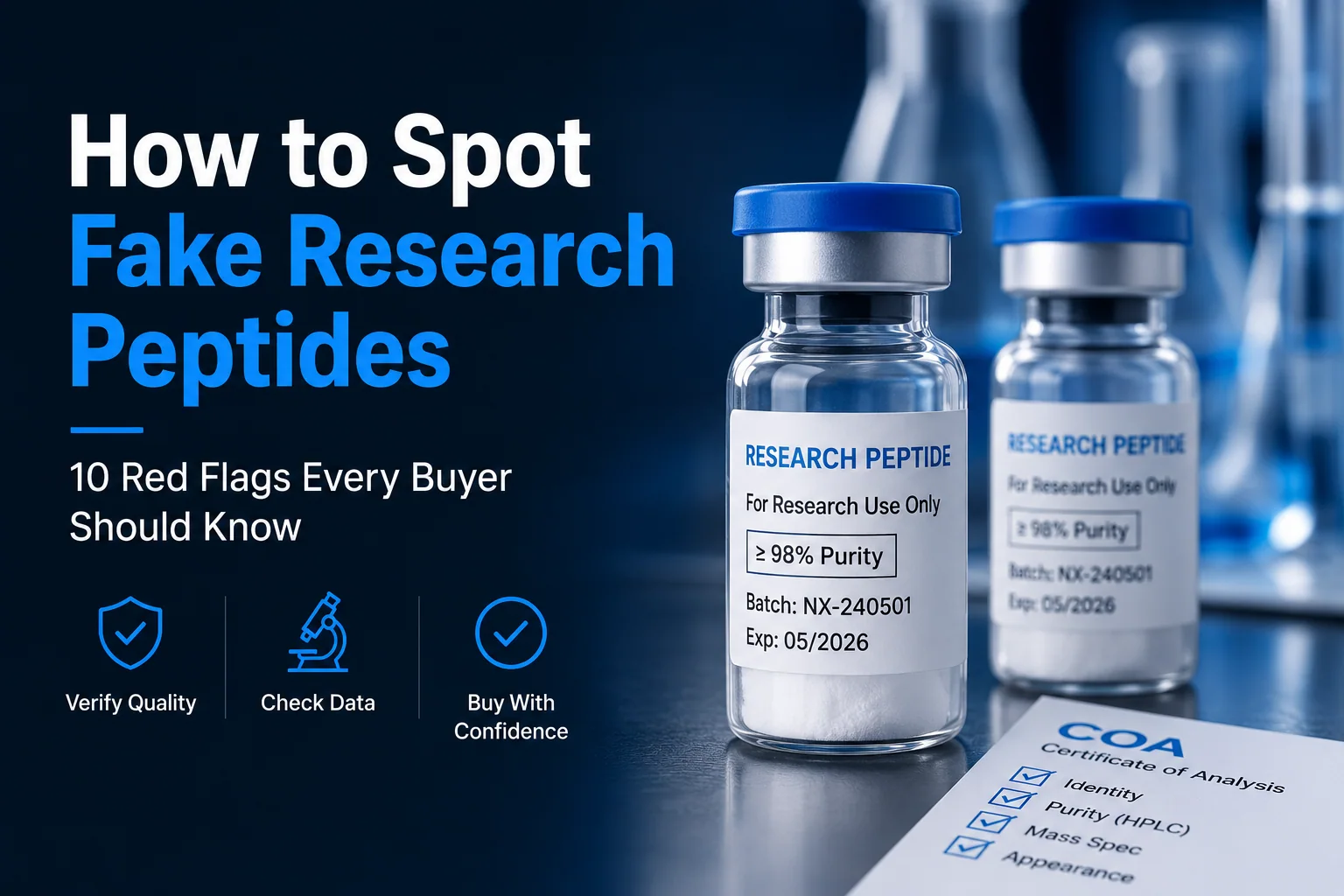
Research peptides have become increasingly accessible through online suppliers, making it easier than ever for researchers to source materials for laboratory use. However, the growing number of suppliers has also made it more important to evaluate product quality carefully before making a purchase.
Not every supplier follows the same quality standards, and not every product is supported by the same level of transparency. Learning how to recognize potential warning signs can help buyers make informed purchasing decisions and choose suppliers that prioritize quality, consistency and professionalism.
This guide explains ten important factors to evaluate before purchasing research peptides.
Why Product Quality Matters
Research peptides are highly specialized materials that require careful manufacturing, purification, packaging and storage.
While products from different suppliers may appear similar at first glance, important differences can exist in areas such as documentation, analytical testing, storage recommendations and overall transparency.
Rather than focusing only on price, experienced buyers often evaluate the complete purchasing experience before selecting a supplier.
Red Flag #1 — No Certificate of Analysis Available
A reputable supplier should be transparent about product quality.
Whenever available, a Certificate of Analysis (COA) provides important information regarding a specific production batch.
Depending on the supplier and laboratory, a COA may include:
Batch number
Product identification
Analytical testing
Purity results
Testing laboratory
Date of analysis
While documentation alone does not guarantee product quality, transparency is generally a positive indicator.
Red Flag #2 — No Independent Analytical Testing
Some suppliers publish quality documentation that originates solely from the manufacturer.
Whenever possible, buyers may prefer suppliers that also perform independent third-party laboratory verification.
Independent testing can provide additional confidence because the analysis is performed separately from the manufacturing process.
Examples of analytical methods include:
High Performance Liquid Chromatography (HPLC)
Liquid Chromatography–Mass Spectrometry (LC-MS)
Red Flag #3 — Unrealistic Purity Claims
Purity is one of the most frequently discussed characteristics of research peptides.
Be cautious of suppliers making unrealistic or unsupported claims without providing supporting documentation.
Reliable suppliers explain how purity values are determined rather than relying only on marketing language.
Look for clear analytical information instead of vague statements such as:
"Highest quality guaranteed"
"Pharmaceutical grade" (without supporting documentation)
"100% pure"
Red Flag #4 — Poor Website Transparency
Professional suppliers generally provide clear information about:
Company policies
Shipping information
Storage recommendations
Product specifications
Contact details
Frequently Asked Questions
Transparency helps customers evaluate products before purchasing.
Red Flag #5 — Poor Product Information
A high-quality product page should provide more than a product name and price.
Useful information may include:
Peptide sequence
Molecular formula
Molecular weight
Storage conditions
Appearance
CAS number (where applicable)
Research use information
Comprehensive product information demonstrates attention to detail.
Red Flag #6 — Low-Quality Packaging
Packaging protects research peptides during shipping and storage.
Professional suppliers typically use:
Properly sealed vials
Clearly printed labels
Protective packaging
Secure shipping materials
Packaging quality often reflects the overall professionalism of the supplier.
Red Flag #7 — Missing Storage Recommendations
Storage plays an important role in maintaining peptide stability.
Reliable suppliers provide guidance covering:
Recommended storage temperature
Protection from moisture
Light exposure
Storage after reconstitution
Clear storage instructions help customers preserve product quality after delivery.
Red Flag #8 — Prices That Seem Too Good to Be True
Price is naturally an important consideration.
However, significantly lower prices compared with the broader market may justify taking a closer look at what is actually included.
Instead of comparing price alone, evaluate:
Product documentation
Testing information
Packaging
Customer support
Supplier transparency
Overall value is often more important than the lowest purchase price.
Red Flag #9 — No Educational Content
Professional suppliers frequently invest in educational resources that help customers understand product quality, storage and laboratory best practices.
Examples include:
Research guides
Storage guides
Quality information
Frequently asked questions
Laboratory education
Educational content demonstrates a long-term commitment to customer experience.
Red Flag #10 — Poor Customer Support
Reliable customer support is often overlooked.
Before placing an order, consider whether the supplier provides:
Responsive communication
Clear policies
Professional answers
Transparent information
Good customer service reflects the overall quality standards of the business.
Quick Buyer Checklist
Before purchasing research peptides, ask yourself:
✅ Does the supplier clearly explain product quality?
✅ Are storage recommendations provided?
✅ Is analytical testing available?
✅ Are products professionally packaged?
✅ Is product information complete?
✅ Does the website appear transparent and trustworthy?
✅ Is customer support easy to reach?
If the answer to several of these questions is "No," it may be worth evaluating alternative suppliers.
Frequently Asked Questions
How can I tell if a research peptide supplier is trustworthy?
Look for transparency, detailed product information, quality documentation, clear storage guidance and responsive customer support.
Is price the best way to compare suppliers?
Price is only one factor. Product quality, documentation, analytical testing and supplier transparency are equally important.
Why is packaging important?
Proper packaging helps protect research peptides during shipping and storage while reducing unnecessary exposure to environmental conditions.
Should suppliers provide storage information?
Yes. Professional suppliers typically explain recommended storage conditions to help preserve product quality.
What information should a product page include?
A well-designed product page usually includes product specifications, storage guidance, appearance, sequence information (where appropriate) and other technical details that help customers understand the product.
Final Thoughts
Choosing a research peptide supplier involves more than comparing prices. Transparency, product information, packaging quality, storage guidance and quality documentation all contribute to a better purchasing experience.
By evaluating these factors carefully, buyers can make more informed decisions and select suppliers that demonstrate professionalism and consistent quality standards.
As the research peptide market continues to grow, taking a few extra minutes to evaluate a supplier before purchasing can make a significant difference in overall confidence and long-term satisfaction.